Back to your test review
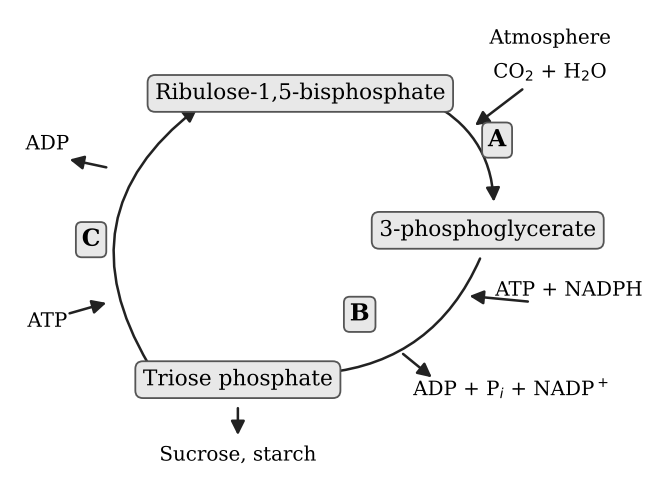
Observe the figure. Identify the stages labelled A, B and C.
Start free test
Observe the figure. Identify the stages labelled A, B and C.
Your answer:
Correct answer: (c)
Advertisement
Explanation
Why (c) is correct
The figure shows the Calvin cycle. Stage A is carboxylation (RuBP + CO2 → 3-PGA, by RuBisCO), stage B is reduction (3-PGA → triose phosphate using ATP and NADPH), and stage C is regeneration of RuBP.
Why the other options are wrong
- (a) · your answer This swaps stages B and C: reduction comes before regeneration.
- (b) · your answer The Calvin cycle starts with carboxylation, and there is no decarboxylation step in it.
- (d) · your answer Carboxylation (fixing CO2) is the first stage, not the second.
NCERT point: Calvin cycle: carboxylation → reduction → regeneration of RuBP.
Thank you! We will check this question.
Practise Photosynthesis in Higher Plants
Take a free 15-question NEET Biology test on this chapter. Timed, scored instantly.